The Basketball-First Difference
Thanksgiving is one of the best times of the year for college basketball fans. Tournaments have sprouted up all over the country, bringing top-tier programs together for some very appealing early-season match-ups. Marquette just returned from the Maui Invitational, which also featured California, LSU, Michigan, Notre Dame, VCU, Wichita State and host, Chaminade.
When you see that list of schools, which one would seem to be the biggest names, with the largest following? There may not be many bigger names in college sports than Michigan and Notre Dame, but the reality is, they are football schools. As a result, their basketball programs are not the top priority or focus of their fanbase and alumni. Michigan plays Ohio State in football this weekend. How many of their fans eyeballed a trip to Maui and took a hard pass, to make sure they had all their ducks in a row for their biggest football game of the year?
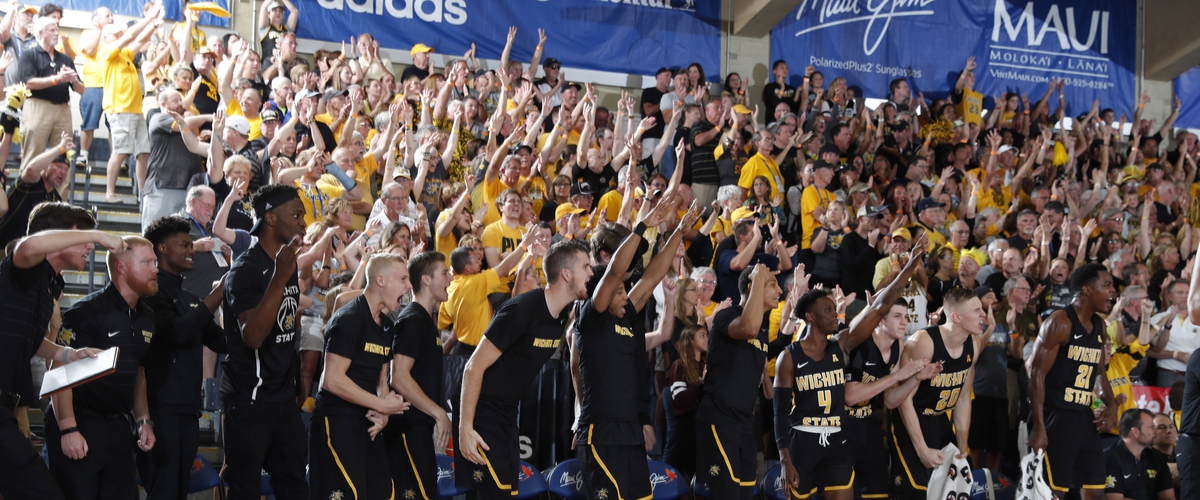
Wichita State actually brought the biggest fanbase to Maui, followed not by Michigan, Notre Dame or either of the other BCS schools, but Marquette. Marquette and Wichita State share an absence of football at their schools (at least at the varsity level) and the same is true of VCU. When Marquette and Wichita State played games in the 2,400-seat venue, their quadrant of the grandstands was at capacity, with overflow crowds spilling into the baseline grandstands and onto the stands on the opposite side of the court. When the "football" schools played, there were seats available in just about every section.
Marquette's official traveling party for this trip filled three motor coaches and a chartered 737-800. That doesn't include countless other fans and alumni, who came to the island and the games on their own. After I returned home, I began watching the holiday tournaments from around the country and noticed a lot of empty seats at many of the other tournaments, which were all a far shorter trip than a flight to Maui. Granted, Portland or Fullerton doesn't have nearly the appeal of a trip to Maui, but I'm still struck by the support basketball schools put behind their programs, versus the football schools, that also have basketball teams.
At basketball schools, basketball isn't just a priority, it is the priority in athletics. I don't know how much coaches in today's game emphasize that difference, but I know it was first brought to my attention when I was a recruit in high school. How does UC-Santa Barbara compete for players against UCLA? Their coaches made a convincing argument to me, that there is a significant difference that stayed at the forefront of my mind throughout my recruitment by UCLA.
UCLA's basketball history was the best in the college game, the roster was stacked with future NBA players and an accomplished coaching staff, but all the resources they highlighted to me on my official visit were the result of the football program, which at the time, was in the midst of back-to-back losing seasons and would only see one bowl game appearance over a four-year span. It didn't matter how many basketball championships Coach Wooden or anyone else at UCLA won or would win the future, football would always be more important. The same situation is likely true at nearly all the other college basketball bluebloods, except for maybe Kentucky.
The basketball coaches at football schools or mid-majors may tell recruits that the scholarship they receive is the same at every school, but that's simply not true. Nearly every high-major basketball program flies charters for most of their road games. Mid-majors and lower-tier D1 schools fly charters sparingly and log a lot of miles on a bus.
Even when charter flights are used, there is a significant difference between the comfort of a 737 that offers first-class seats throughout and a commuter jet with cattle car seating or a collection of even smaller private planes that get bounced around in turbulence like a pinball. That's just part of the travel picture. Do the teams stay at Marriott/Westin-type of properties or something closer to a Motel 6?
Are menus on roadtrips set in advance with the intention of fueling athletes' bodies with the best foods possible or is it more of a mealtime decision, based on whether McDonald's and Burger King is more convenient? All teams travel with trainers, but how many also bring along a physician and strength & conditioning coach? Does that really matter? As I watched San Diego State play today and heard commentary about how many of the players on the team were dealing with food poisoning, I think it matters. Immune systems are also compromised in the winter months, so staying on top of a player's physical health is often a key to peak performance on the court. (How many schools even have a team physician or dedicated strength & conditioning coach to bring along, or is that often the same person as the trainer who tapes ankles?)
Basketball players are supposed to be "student-athletes," so do academic support personnel travel with the team or are coaches also in charge of helping keep tabs on schoolwork while on the road?
In the end, it's a complex maze of differences that make up college basketball programs. There is a noticeable difference between playing at a basketball-first school, like Marquette (which is also in the only high-major basketball-first conference, the Big East), Wichita State or Gonzaga and attending a football school that also fields a basketball team. If a student-athlete's goal is to play professionally, where will they go? Pro scouts will talent anywhere in the world. Wouldn't it make sense to play where you are given the best possible chance to play every game at your very best and achieve success both on and off the court?