Olympic Weightlifting - The front squat
Optional...
Optional...
Optional...
In my last article, we compared the Olympic lifting back squat to the power lifting back squat. Today I would like to discuss the merits of the front squat, another great exercise for building leg strength, and explosive power.
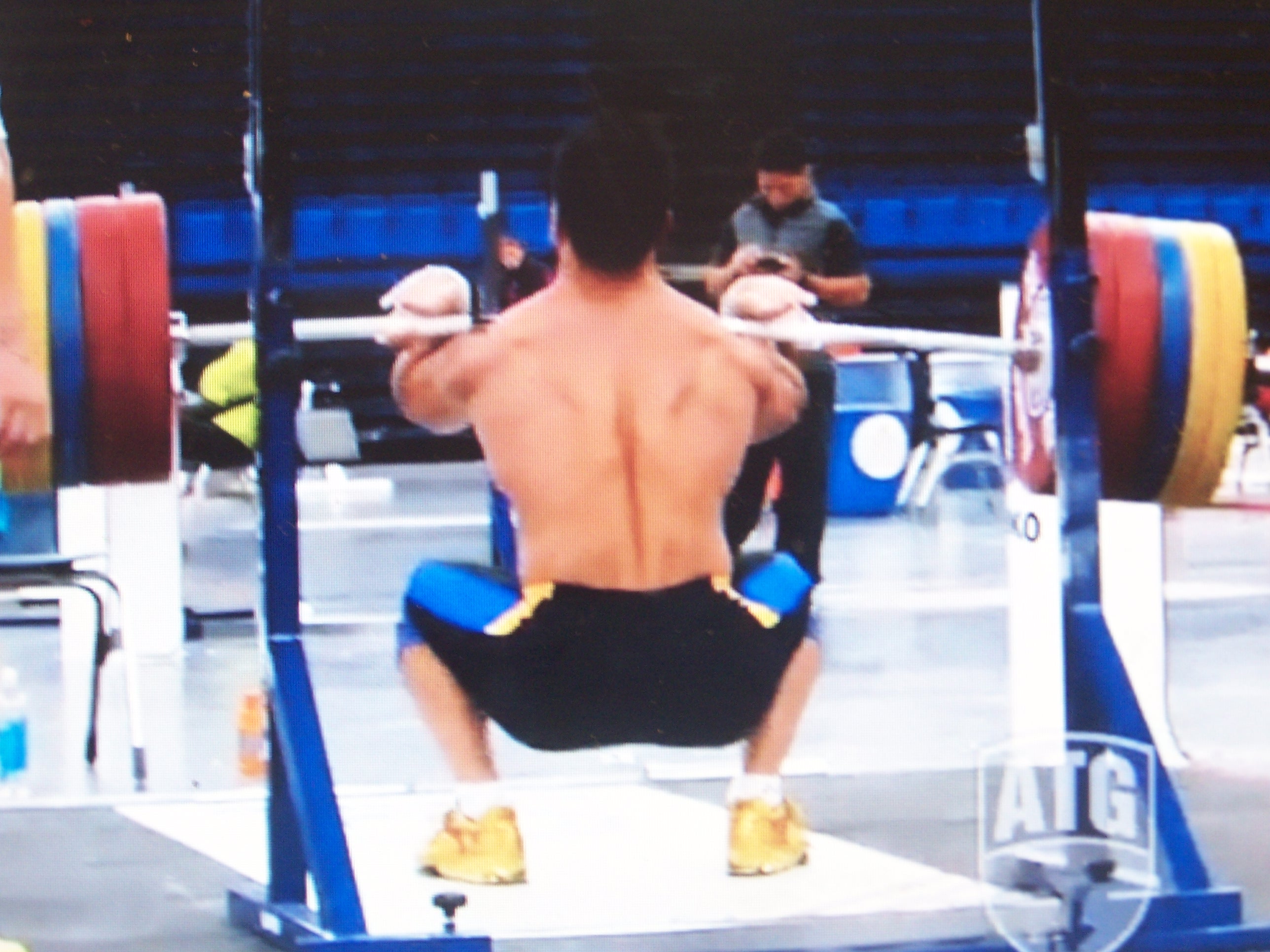
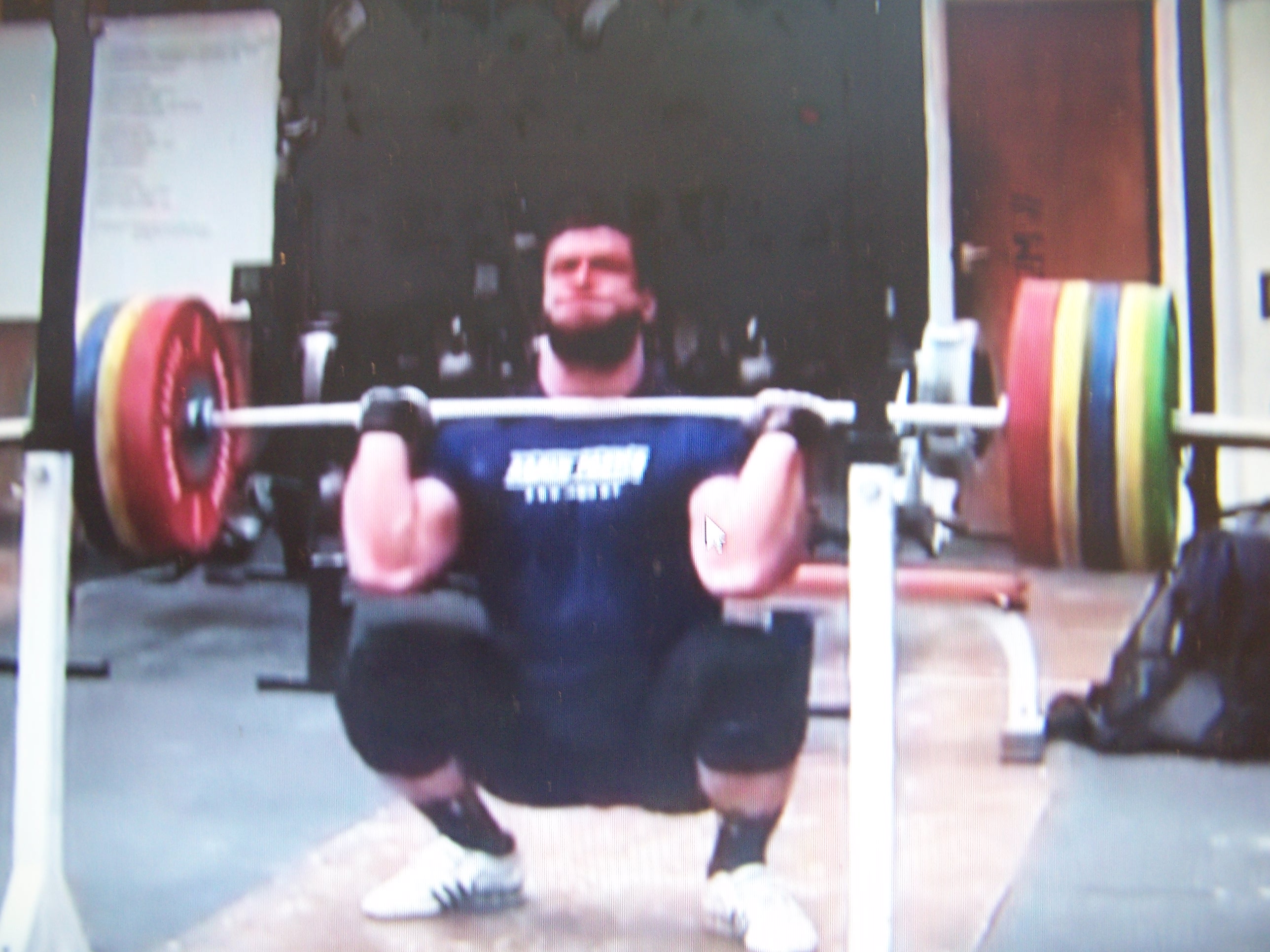
The obvious difference between the back squat and the front squat is that rather than having the bar rest on your trapezius muscle, you are instead resting the bar on the front of your shoulders. This exercise is not only used by most Olympic weightlifters, but also by most bodybuilders.
The main reason it is so popular with bodybuilders, is that it is a great exercise for developing the quadriceps muscle. Back squats will also develop the quadriceps muscle, but not quite like front squats do, because in the back squat, you are also using the hips, the glutes, the back, and the hamstrings. The front squat really zeroes in on the quads.
There is one bodybuilder in particular that always impressed me, and his name is Tom Platz. They nick named him Quadzilla. When it came to squats, this guy could keep up with any Olympic lifter or power lifter. He was able to hit a very low position on both the back squat and the front squat, and he was using some very impressive weight. So if you are a bodybuilder, and you want to build up your quads, I suggest you get busy on the front squats.
Now that we've discussed why the front squat is so essential to the bodybuilder, let's now look at why it's also essential to the Olympic weightlifter, but before we discuss that, I would like to point out why front squats are not nearly as popular with power lifters or football players. In football, I would say the back squat is more essential than the front squat, because as we discussed, the back squat not only hits the quads, but also the hips, glutes, back, and hamstrings, all the muscle groups that are so important in the sport of football, and especially important if you are a lineman.
In power lifting, front squats are not used very much, although I'm not convinced they wouldn't help to improve your back squat to some degree, but as I mentioned in my last article, the power lifter is mainly focused on building pure brute strength, and this is why they mainly focus on the competition lifts, the back squat, the bench, and the deadlift.
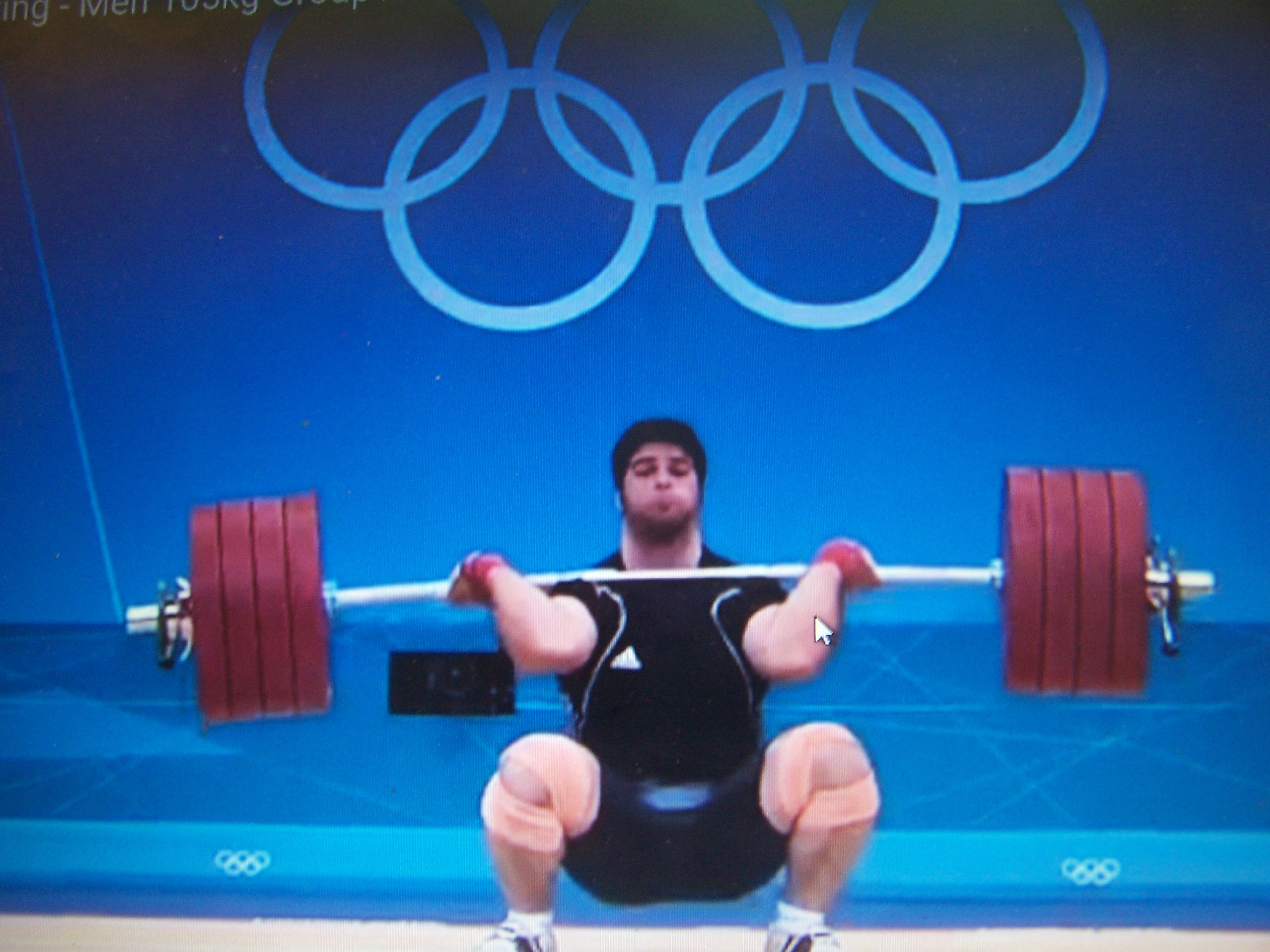
So let me now explain why the front squat is so essential for the Olympic weightlifter. The main reason is because it is the exact same position you will be in when performing a full clean. A full clean is different than a power clean. Most football players do power cleans, while most bodybuilders and power lifters do neither the power clean or the full clean
In the power clean you are bringing the bar from the floor (in some training programs blocks are used) to your shoulders in one motion and bending your legs slightly. In the full clean, you are once again bringing the bar to your shoulders, but now instead of just slightly bending your legs, you are shuffling your feet outwards and going into a full squat.
Now comes the part where you have to stand up from that full clean. If you've been doing your front squats faithfully in training, you shouldn't have to struggle too much to stand up from that clean, and still have enough strength left to jerk the weight overhead. I should also note that you should be using a lot more weight on the full clean than on the power clean. I suggest doing front squats once a week and back squats once a week. For older lifters like myself, once a week on squats, rotating front and back.
For me, the front squat was always enjoyable. It came relatively easy to me and I was able to use some pretty heavy weight, but for a lot of people, it is much more difficult than the back squat. Some people have a hard time holding the bar on their shoulders because they can't get their elbows high enough. It requires a certain amount of flexibility in the upper arms, triceps, and wrists.
I've noticed that some people have to hold the bar on their finger tips rather than in the palm of their hands. This is usually the case with people who have long forearms. Most bodybuilders overcome this problem by simply using the arms crossed technique to hold the bar, but I would not recommend this technique for Olympic lifters, since your front squats are supposed to be just like your clean.
If you are one of those who has a hard time getting your elbows up high enough to hold the bar, you will need to work on some flexibility exercises. Have a training partner gently push up on your elbows while you hold an empty barbell or a bar with light weight. Some people also have a harder time breathing on front squats. This is because the bar is not only resting on your shoulders, but also on your collar bone or clavicle.
For this reason, I suggest lower reps on front squats. It takes a little getting use to, but after you've been doing them a while, it shouldn't be a problem. I also highly recommend the use of weightlifting shoes, or at least a sneaker with a bit of a heel to it when doing squats. This will help you to not lose your balance.
Another big advantage of the front squat is that it's safer than the back squat. No need for spotters. If you get stuck in the bottom position, you simply push the weight forward and dump it. You can also use the technique of “dumping the weight” on back squats, but it is a bit more difficult to dump the weight behind you than in front of you, and it may require some practice with lighter weight.
I do not suggest you do this at a gym that does not have bumper weights though. It's a good way to get yourself thrown out of the gym. While we're on the topic of safety, this is another reason I prefer the Olympic (high bar) squat over the power (low bar) squat. Using the low bar technique, with the wide stance and wide grip, your momentum is going forward, and if you get stuck, I hope you have some very strong spotters, because it's going to be almost impossible for you to dump the weight behind you.
So there you have it. I hope you will find the front squat as beneficial and as enjoyable as I have. It has served me well throughout the years. One final reminder. Remember to keep your elbows up, chest out, back straight, and “explode” out of the bottom position.