The Olympic Squat for explosive power
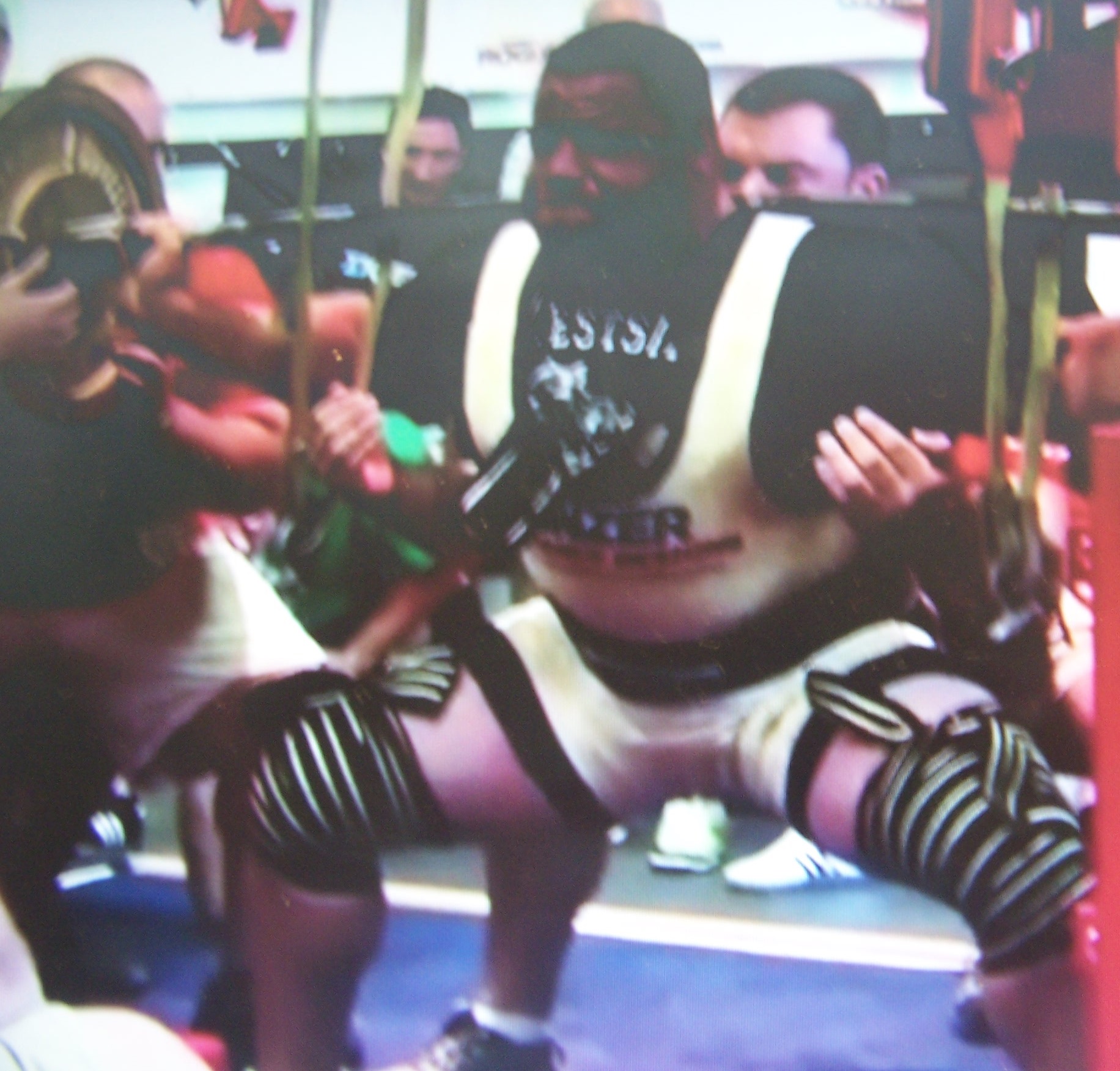
Powerlifting squat or "low bar" squat
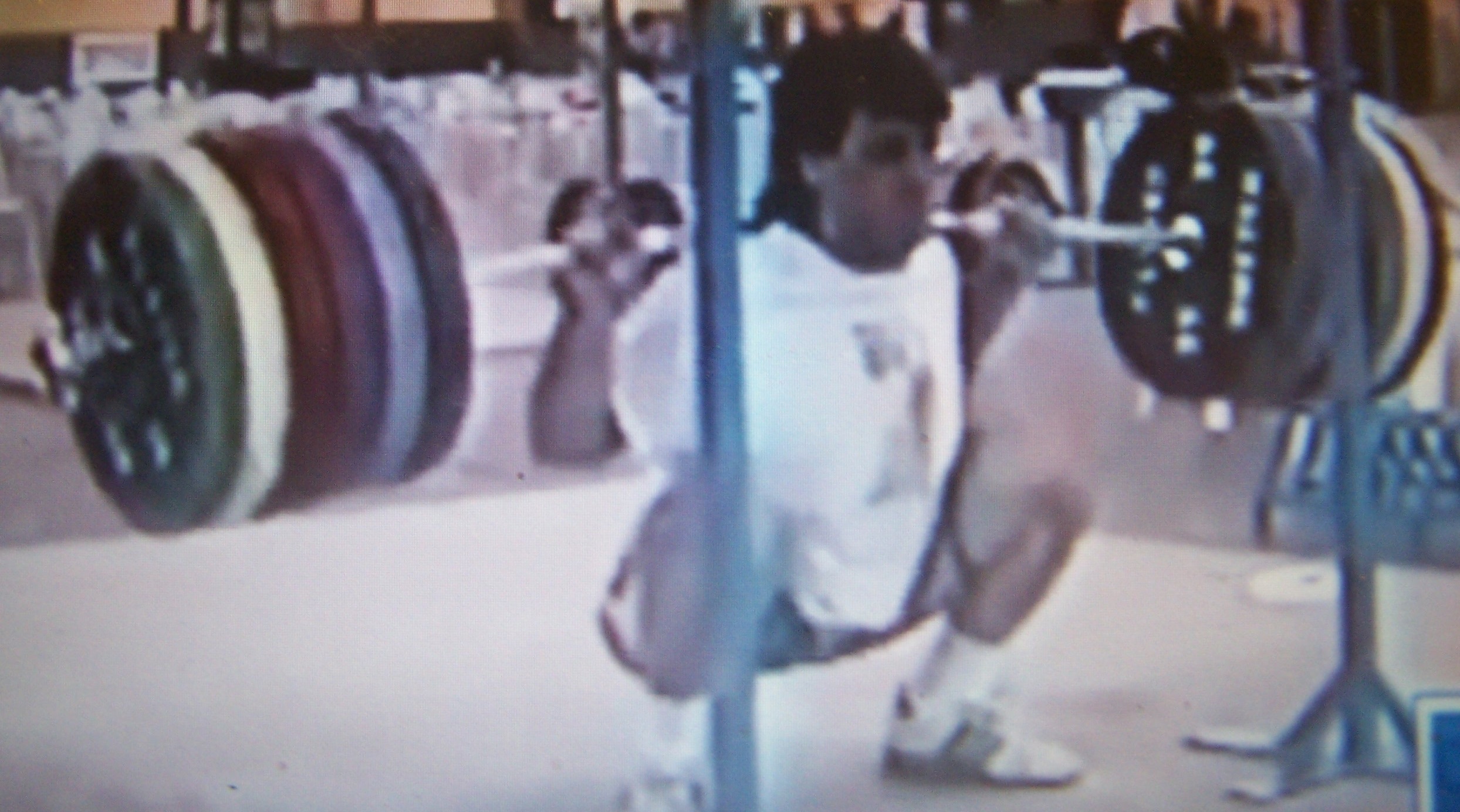
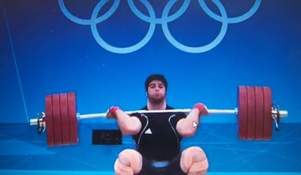
Bottom position of Olympic lifting squat
I’ve been weight training for roughly 35 years now. I competed in Olympic weightlifting from 1981-1989 and in powerlifting from 2011 to present. The squat has always been my favorite lift. Over the years I’ve heard so much misinformation on this basic, yet extremely beneficial exercise. It’s hard to imagine that after all these years, there are still people who believe that squatting below parallel is bad for your knees. Actually it’s quite the contrary. Studies have shown time and again that athletes who perform full squats in training are less likely to have knee and leg injuries than athletes who don’t. They are essential for building leg strength, improving flexibility, speed, and explosive power. With that said, I highly recommend that anyone considering adding squats to their training program learn proper form and technique before concerning yourself with how much weight you are using.. Almost all injuries that occur in the squat are the result of using bad form and technique.
Now I would like to explain the differences between the Olympic weightlifting technique of squatting and the powerlifting technique. If you ever watch an Olympic lifter squat, you may get the impression that he/she is bouncing out of the bottom position, but what they are actually doing is what’s known in lifting circles as “exploding” out of the bottom. This is just one major difference between an Olympic lifting squat and a powerlifting squat.
For those not familiar with weightlifting, Olympic lifting competitions consist of the snatch, lifting the bar from the floor to overhead in one very fast and fluid motion. The second, more well known lift, is the clean & jerk, where the lifter first brings the bar to his shoulders, and then after a brief pause, rams the weight overhead (the jerk). Squats are not performed in Olympic lifting competitions, but they are performed regularly in training, for the obvious reason that leg strength is extremely important in Olympic weightlifting. It is especially important in the clean portion of the clean & jerk. If you can’t clean the weight, you can’t jerk the weight.
In the clean, you pull the bar up as high as you can, and then very quickly, you drop under the weight. The weight forces you into a deep squat. This is why it's so important to do deep squats in training. If you've been doing your squats regularly in training, you should be able to stand up from that clean, and still have enough strength left to jerk the weight overhead. The idea is to “explode” out of the bottom position. So if you want to be able to stand up from that clean quickly and explosively, you must do your squats the very same way. The snatch and clean & jerk are not slow motion lifts, so your squats should not be either. It's all about speed, speed, and more speed.
Although I have seen some power lifters do their squats using this technique, most power lifters use a very different technique than Olympic lifters. Power lifting competitions have three lifts. The squat, the bench press, and the deadlift. These lifts do not require the same speed as the snatch and clean & jerk. While Olympic lifting relies heavily on speed, power lifting relies heavily on sheer brute strength. Not all, but most power lifters use a very wide grip on the bar, as opposed to the more standard shoulder width grip. This allows the lifter to rest the bar very low on his traps, as opposed to resting the bar high on the traps. Most power lifters use what is known as the “low bar” technique, while most Olympic lifters use the “high bar” technique. Another difference is that most Olympic lifters will use a shoulder width, or slightly wider stance with feet slightly pointed out, while most power lifters will use a very wide stance. This wide stance, along with the wide grip and bar low on the traps, allows the lifter to squat down slowly, while leaning forward slightly, so that he/she is now not only using the legs, but the back as well. The sole purpose for using this technique is to be able to squat more weight.
I have been asked by some why I don't switch over to the “low bar” technique since I am now competing in power lifting and no longer competing in Olympic lifting. This would after all, enable me to squat heavier weight. My answer is this. #1 – I have witnessed far too many injuries with the “low bar” technique, and very few with the “high bar” technique. #2 – I want to stay true to my Olympic lifting roots. For me personally, lifting was never just about seeing how much weight I could lift. To me it's also about staying athletic, staying flexible, increasing speed and explosive power. This is also why I continue to perform not only the back squat, but also the front squat. The front squat is a lift that very few power lifters do, but it is used regularly by Olympic lifters in training. I'll discuss the merits of the front squat in my next article.