Final NBA Mock Draft 2018

Put your LeBron free agency rumors to the side for a bit. Throw your Kawhi trade packages on the back-burner, because 60 more players are about to find their new NBA team Thursday night. And with the exception of an almost sure-fire first pick, the other 59 are up in the air. So rather than try to nail the biggest guessing game in professional basketball, I'll be making every pick in the first round based on who should be the selection, stepping into the shoes of each general manager. Here goes:
1. Phoenix Suns: DeAndre Ayton, C, Arizona
This pick for me wasn't as much of a slam dunk as most people think. It was a three-horse race between Ayton, Marvin Bagley III, and Luka Doncic, but in the end, Ayton's physical tools and skyscraper potential win out. The 7'1” big man already has all the tools to be among the best centers in the league from the get-go, and he showed it off at Arizona, averaging a double-double while babying opposing defenders in the post. But Ayton is far from just a back-to-the-basket big. His ability to score from mid-range, the perimeter, and the free-throw line make him a prototypical center in today's NBA. Phoenix would be wise to keep Ayton in Arizona.
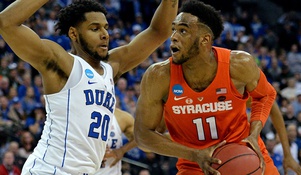
2. Sacramento Kings: Marvin Bagley III, PF/C, Duke
Bagley is viewed as a bit of a tweener between the four and the five, but the Kings are extremely weak at both positions, and Bagley would likely be the number one scoring option from day one. The ACC Player of the Year is an offensive phenom, excelling around the rim, particularly on the offensive boards. Credit that to his quick second jump and instinctive pursuit of the basketball. He also thrives in the transition game, where he can get out and run better than most 6'11” guys, and isn't afraid to step out and shoot the three, where he shot 39.7% for Duke. Where Bagley does struggle is in his low post defense, where he was able to skate by in college by just being bigger than everyone he went up against. This won't be the case in the pros. But if I'm Sacramento, I'm not too worried, because defending in the post is pretty much the only thing that Willie Cauley-Stein does well.
3. Atlanta Hawks: Luka Doncic, SG/SF, Slovenia
The scoop is that this pick isn't a no-brainer for Atlanta, but it should be. Doncic rounds out a clear trio of prospects that are a notch above the rest, and while the aforementioned two were dominant collegiate bigs, neither of them are as accomplished as Doncic. The Slovenian won a EuroLeague title with Real Madrid, earning Final Four MVP honors in the process. That came just one day after he was named the league's MVP. It's easy to see why. Doncic is a high-level shooter who can attack the basket and finish in traffic because of his strong frame, which brilliantly sets up his strongest asset. There's a little Ben Simmons and LeBron in Doncic, namely in the way he draws help defenders and then whips passes to open shooters in the corner. Plays like those will be vital for an Atlanta roster devoid of go-to scorers.
4. Memphis Grizzlies: Jaren Jackson Jr., PF, Michigan State
I've never been the biggest proponent of Jackson's. Maybe it's the limited minutes in East Lansing. Maybe it's the routine foul trouble. Maybe it's just the fact that guys who average 10.9 and 5.8 shouldn't go in the top five. They just shouldn't. But I'm pulling the trigger anyway. Jackson is the youngest prospect in the draft, and he has tremendous room for growth. His ability to shoot the three and take defenders off the dribble at 6'11” is intriguing, and he did shoot 51.3% from the field and 39.6% from three, so the talent is there. He just wasn't the focal point of Michigan State's offense. Pair him alongside Marc Gasol and he'll grow. Where Jackson does shine already is on the defensive end of the floor, where he averaged three blocks per game and showcased his lateral quickness on a nightly basis. Because of his ability to guard anyone on the floor, Jackson is the antidote to a league that is trending towards creating switches on virtually every offensive possession. He still has a long way to go to reach his potential, but that potential is immense.
5. Dallas Mavericks: Mo Bamba, C, Texas
Bamba is an elite rim protector in every sense of the word. At 7'0” tall with a 7'10” wingspan (the longest recorded in NBA Combine history), he is a physical freak, and he uses every bit of that wingspan to his advantage. Bamba was the nation's leading shot-blocker this past season at 3.7 per game, and will serve the same role for Dallas should they draft him at five. Mark Cuban remembers the role Tyson Chandler played for the Mavericks' championship team in 2011, and Bamba can be so much better than that if he taps into his full potential. He routinely gets beat off the dribble and just utilizes that wingspan to recover and block shots without even sliding his feet. He also started to grow his offensive game late in the season for Texas, which was in large part predicated on attacking the glass, but Bamba can certainly score from beyond the paint. Assuming Rick Carlisle can help Bamba unlock his offensive game a little more, I love the young pick-and-roll pairing of him and Dennis Smith Jr.
6. Orlando Magic: Trae Young, PG, Oklahoma
I have Young as the fourth best prospect in this draft, but he falls to six strictly because of personnel. Memphis is paying Mike Conley $28.5 million a year, and Dallas has their future star in Smith, so they both have to pass on the Oklahoma product. Young's offensive prowess needs no introduction. He led the country in scoring and assists, a rare combination in college basketball. He's so much more than a guy with unlimited range, and he will be a 20-point scorer in Orlando. Watching Young play at Oklahoma was eye-opening. I truly believe the Sooners would have been the worst Power Five team in college basketball without him. He legitimately had zero help and still overachieved. The big concern with Young is his size, and specifically, how he'll be able to guard opposing point guards. But Stephen Curry wasn't Stephen Curry when he was drafted out of Davidson. He was viewed as way too skinny and couldn't defend at all. It's amazing what years with an NBA strength coach can do. Young won't weigh 177 pounds in three years. He has a long way to go to even be serviceable on the defensive end, but it's manageable, and his offensive impact is way too much to pass up.
7. Chicago Bulls: Michael Porter Jr., SF/PF, Missouri
After missing virtually the entire season with a back injury, Porter saw his stock fall, pushing him out of the top three. Coming back for a couple games at the end of the season, however, might have assuaged fears a little. Make no mistake about it; Porter is not Harry Giles. He didn't just flat out lose his athleticism. He's still the same player he was, and can be a volume scorer in the NBA. Porter gets to the rim with ease with his long strides, sporting an Anthony Davis like frame coming out of college. He also has a very high release on his shot, making him able to simply rise up and get his shot off in traffic. This pick is on potential alone, but with the increased demand for athletic two-way wings, Porter fits the bill. And if he's healthy, which it looks like he is, the Gatorade High School Player of the Year could be a steal at number seven.
8. Cleveland Cavaliers: Collin Sexton, PG, Alabama
This pick is the only good thing that came out of the Kyrie trade, so the Cavs can't afford to miss here. Picking Sexton serves two purposes. First, it provides LeBron with another go-to playmaker that he desperately needed in the playoffs should he choose to stay. Second, if LeBron leaves, it gives Cleveland a potential face of the franchise that can actually be comfortable with the ball in his hands. Sexton is a plus-athlete who can flat out score, finishing through contact and getting to the line often. He plays at an extremely fast pace that can work to his advantage in today's transition heavy game. The Alabama point guard is also a menace on the defensive end, applying ball pressure and holding his own in switches. He can be the best defender on the roster from day one in Cleveland, which isn't saying a whole lot, but you've got to start somewhere.
9. New York Knicks: Shai Gilgeous-Alexander, PG, Kentucky
New York just misses out on Sexton, who would have been the perfect selection at this spot, so they'll settle for the next best point guard on the board in Gilgeous-Alexander. The Knicks went point guard last year, only to discover that Frank Ntilikina is much better suited playing off the ball, and while Trey Burke showed flashes of brilliance at times, he isn't a great option as a starter going forward. Gilgeous-Alexander has the height and length that jumped out at the Knicks last year with the French Prince, but he has the point guard skills that Ntilikina is missing. At 6'6”, Gilgeous-Alexander has a quick handle and finishes in the paint over and around defenders with his long arms. That combined with his proficiency in the pick-and-roll makes his partnership with Porzingis exciting. He's already a top passer, a tough defender that uses his length to generate turnovers, and a very underrated shooter at 40.4% from beyond the arc. He might really surprise people as a rookie.
10. Philadelphia 76ers: Mikal Bridges, SG/SF, Villanova
JJ Redick will be 34 on Sunday, and he serves a vital role for this Sixers team. Bridges can slide into that shooting guard spot and be an improvement over Redick on the defensive end. With Robert Covington's future in Philadelphia also waiting in the wings, Bridges could just as easily play the three and replicate what Covington brought to the table. Bridges is one of the safest picks in this draft who can be a plug-in as a three-and-D player at either the two or the three, and that's exactly what the Sixers need. There can never be enough shooters in Philly, mostly because their starting point guard isn't one, and Bridges fits right into the defensive intensity that characterized this team. The knock on Bridges is simple. What you see is what you get. He has a very low ceiling coming into the league at 22 years old, but he doesn't need to be a focal point to aid The Process. The two National Championships at Villanova don't hurt either for a team trying to establish a winning culture.
11. Charlotte Hornets: Kevin Knox, SF, Kentucky
Watching Kentucky, a lot of times it felt like Knox was playing in slow motion, and 15.6 points per game seemed pedestrian given his skill set. When he really let loose, he dominated. Look no further than the West Virginia game and his 34 points for evidence of that. Just two games later, though, he put up five in a loss to Missouri. Consistency seemed to be the problem for Knox, and that's probably why he falls to 11 here. I'm biting with Charlotte because he's too basketball-savvy to fall much further. Knox has the potential to be a very solid pure scorer in the NBA. You can just see it when he knocks down that smooth pull-up jumper of his. He showed the ability to thrive in transition and finish second chance points at times, even if his overall athleticism leaves something to be desired. At the end of the day, this is an 18-year old with loads of potential if he can start to knock down shots on a more consistent basis, because that opens up the rest of his game.
12. Los Angeles Clippers: Zhaire Smith, SG, Texas Tech
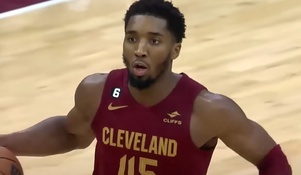
Donovan Mitchell was selected at 12 last year, and don't be surprised if the steal of the draft ends up taken with the exact same selection. I love Zhaire Smith as a prospect. He's an 18-year-old kid with all the tools to be an outstanding two-way shooting guard in this league for years, and nobody even knew his name a year ago. An unheralded recruit out of high school, Smith made his name at Texas Tech with his jump-out-the-gym athleticism and hard-nosed defense. A put-back dunk connoisseur, Smith posted the second highest vertical at the combine, but he's a whole lot more than just a pure athlete. Smith sees the floor very well for a two-guard, often passing up his own shots for better ones, which he did a lot for Keenan Evans at Texas Tech. He's just one of those guys who is going to step right into an NBA offense and belong, making highlight plays along the way. Smith is even stronger on the defensive end, making blocks on big men look routine. His strong frame allows him to guard bigger players at only 6'4. Pair Smith with Patrick Beverley and the Clippers have a defensive back court that can shut you down. Just look at what Rondo and Holiday did to the Blazers in the playoffs.
13. Los Angeles Clippers: Robert Williams, C, Texas A&M
Los Angeles is going full rebuild, which means that they have to find a big man to fill the void opened by the Blake Griffin deal and the imminent departure of DeAndre Jordan. And who better to replace Jordan than a high-flying, shot-blocking, tone-setting center from Texas A&M. Robert Williams is that guy. Williams is a bit of an anomaly as a prospect. He could have been a lottery pick last season, but he returned to college, put up worse numbers, and still remains in the lottery conversation. The problem at Texas A&M was always positioning for Williams. He's a natural five who was pushed to the four because of the prominence of Tyler Davis. At times, the duo would work well in the paint, obliterating opposing teams on the boards, but often times there was little room for Williams to operate, and he doesn't have a reliable outside shot to fall back on. Williams is still a work in progress, but at 6'10” and 240 pounds with a 7’5” wing span, he's a force to be reckoned with on the defensive end. If the Clippers are going to have to rebuild, they might as well do it in the mold of the Utah Jazz, and two defensive stoppers in the back half of the lottery will certainly help them do that.
14. Denver Nuggets: Donte DiVincenzo, SG, Villanova
Before his 31-point outburst in the National Championship game, DiVincenzo wasn't thought of as a 2018 draft prospect, and still most people don't view him as a lottery pick by any stretch, but he has rightfully vaulted his way into draft day prominence. For starters, the "Michael Jordan of Delaware" is a great shooter with the ability to take over when he gets hot. Just ask John Beilein. DiVincenzo also scores off the dribble with ease, finishes in the lane, and can really get off the floor. His athleticism was criminally undervalued until he posted the highest vertical leap at the combine. What makes DiVincenzo so unique as a prospect is that he has virtually zero weaknesses. He rebounds as well as any guard in the draft. He's a very smart passer. He's a tenacious defender who will alter shots at the rim. And he's a guy who knows his role, coming off the bench throughout his time at Villanova. What more could you ask for if you're a Nuggets team just minutes away from the playoffs.
15. Washington Wizards: Wendell Carter Jr., PF/C, Duke
This is about as far as you'll ever see Wendell Carter fall, and he'll probably end up going in the top eight on draft night, but halfway through is as good a time as any for a reminder that this mock is me stepping into the front office of each team to make the selection, and I just couldn't pull the trigger on Carter before 15. Carter routinely struggled in the post, putting up an underwhelming post-up scoring efficiency (.753 points per possession). This often came against smaller defenders, since Carter was never the focal point of an opposing team's game plan. He won't be taking on 6'7” wings in the paint in the NBA, and Carter lacks the plus athleticism to thrive in those matchups against similarly sized defenders, especially since he projects as more of a center than a power forward. What Carter does bring to the table is a knack for attacking the glass, and his thick frame and long wingspan will allow him to stay with taller centers. He's also a fantastic post passer, and should be credited with a lot of Bagley's easy buckets. He showed flashes from range, so if he can become a reliable perimeter shooter, he can be a crucial member to a playoff team like Washington, but don't expect all-star status from Carter.
16. Phoenix Suns: Miles Bridges, SF, Michigan State
Bridges is a low-ceiling, high-floor prospect who can excel in an offense where he doesn't have to be a top scoring threat. In Phoenix, with Ayton, Devin Booker, and Josh Jackson, Bridges can more easily settle into a role where he can play to his strengths. He won't be asked to create shots like he was at Michigan State, where he was exposed a little trying to take defenders off the dribble in the half court. Bridges's game mirrors Gerald Green's, with the ability to capitalize on athletic rim runs as well as take advantage of catch-and-shoot opportunities. Though undersized at just 6'6”, Bridges makes up for it with a strong frame that makes him tough on the defensive end, which is the main need that Phoenix has to address with this pick.
17. Milwaukee Bucks: Lonnie Walker, SG, Miami
Somehow, the Tony Snell experiment in Milwaukee persists, even though the results are already in. Newsflash: It doesn't work. Snell averaged a mere 6.9 and 1.9 this season, while Milwaukee clung to the hope that Snell's three-and-D label would be enough to keep him in the rotation. By Game 7 against Boston, it became clear that Snell had fallen out of favor, and he saw just three scoreless minutes. He averaged 2.7 points per game for the series. Enter Lonnie Walker, a freshman out of Miami who can become a legitimate scoring threat at the shooting guard spot, and has the long arms and quickness to develop into an equally strong threat on the defensive end. Walker seemed to just scratch the surface of his talent at Miami, showing off his athleticism and finishing ability while becoming a closer late in the season. If he continues to progress, Walker and Brogdon together can help establish continuity at the two-guard spot, and Milwaukee can move on from Snell entirely.
18. San Antonio Spurs: Khyri Thomas, SG, Creighton
Thomas is exactly the type of player that San Antonio can pick up at 18 and insert right into the rotation. And with Ginobili either out the door or on his way out, there's room for a two-guard like Thomas. Thomas is a tad older than most players in the first round. He'll be 22 on draft day due to a stint at the Fork Union Military Academy before he enrolled at Creighton. But if there's anybody who will gladly sacrifice a couple years of age for that level of toughness, it's Gregg Popovich, who served five years in the Air Force. Thomas is a pest on defense, using his brain as much as he does his feet. He doesn't bite on fakes, and excels defending in isolation situations. Offensively, Thomas is mostly a three-point threat, which fits into the Spurs' scheme, but he has the skill and athleticism to handle the ball and finish through contact. I wouldn't hesitate to lock in Thomas on draft day if I'm San Antonio.
19. Atlanta Hawks: Aaron Holiday, PG, UCLA
Holiday might be small, even by point guard standards, but with long arms, an aggressive nature, and years of experience, he more than makes up for it. The 6'1” point guard blossomed in his junior year at UCLA, taking over the point guard duties from Lonzo Ball and running with them in route to 20.3 points and 5.8 assists per game. He thrives in transition, and can generate a shot from anywhere on the floor in the half court, particularly off the dribble, where he finishes in traffic as well as any point guard in the country. Holiday has grown up around the pro game with his brothers, Jrue and Justin, and their knack for knocking down threes and playing hard-nosed defense has clearly rubbed off on him. He has the potential to be the starting point guard to open the season for Atlanta with news of Dennis Schroeder demanding a trade, and he could be the next in the line of top flight UCLA point guards to make a splash in the NBA.
20. Minnesota Timberwolves: Keita Bates-Diop, SF/PF, Ohio State
Bates-Diop missed most of his junior season with a stress fracture in his left leg. Prior to that, he averaged 9.7 and 5.2, shooting just 20% from three. After his medical redshirt, Bates-Diop came back a whole new player. The 6'9” forward averaged 19.8 and 8.7, boosting his three-point percentage to 36% and earning Big Ten Player of the Year honors. With so much improvement in just one year, I find it hard to fathom that Bates-Diop is widely regarded as a second round pick. His 7'4” wingspan allows him to guard multiple positions on the defensive end, and his improved jumper gives him freedom to operate on the offensive end. Bates-Diop also has a knack for rising up and finishing over defenders with his short jumper in the paint. Minnesota has relied on Gibson and Dieng alongside Towns in the post, but Bates-Diop is more of a scoring threat that can capitalize on double teams toward Towns.
21. Utah Jazz: Elie Okobo, PG, France
Ricky Rubio has one year left on his deal, and the Jazz could really use a point guard off the bench. Okobo can play both guard positions, and did so with Pau Lacq-Orthez in the Pro A League. The 20-year-old Frenchman has been on NBA radars for years, and finally broke out this year, scoring 44 points in a playoff game and showcasing that he can be a scoring threat in the NBA. Okobo is a gifted passer, often running the pick-and-roll and rifling passes to the corner, but he sometimes misses the obvious pass to the rolling big. He’s unafraid to pull up from anywhere if defenses don’t switch on the pick-and-roll, and will take bigs off the dribble if they do. Okobo has grown as a defender as well, and has the potential to be a lockdown defender. This is a guy with a lot of potential, and Rubio is the perfect guy to unlock that potential in the last year of his contract.
22. Chicago Bulls: Kevin Huerter, SG, Maryland
When you get to the last third of the first round, you’re usually looking for a guy who can fill a specific role for your team, and Huerter can do that for the Chicago Bulls. He’s a lethal three-point threat who made 41.7% of his 5.5 attempts per game, and he isn’t just a catch-and-shoot guy. Huerter comes around screens looking to score and commands tough perimeter defense. His height (6’7”) allows him to get his shot off over shorter two-guards as well. Huerter might struggle on the defensive end of the floor given his below-average length, but the former New York Mr. Basketball can really shoot, and there’s always room for shooters on struggling teams like Chicago.
23. Indiana Pacers: Chandler Hutchison, SG/SF, Boise State
Hutchison figures to carve out a solid reserve role wherever he goes, and his versatility on both sides of the floor will allow him to spell Oladipo and Bogdanovic in Indiana. Hutchison was a four-year player at Boise State, averaging 20 points and 7.7 rebounds in his senior year. Similar to the way Oladipo uses his running start to attack the rim, Hutchison often slashes at full speed, finishing with ease. He shot 72% at the rim and got to the line often when he didn’t. Hutchison might shrink into a three-and-D role off the bench based on his ability to effectively guard multiple positions, which wouldn’t be the worst thing for Indiana, but he’ll have to gain more consistency on his jumper.
24. Portland Trail Blazers: Omari Spellman, PF/C, Villanova
Spellman played the five for Villanova, but at 6’9”, he’s likely an NBA four, which happens to fill a need for Portland, who’s been stretching Al Farouq-Aminu to the four for years. Spellman will probably have to drop some weight to be able to guard opposing fours on the perimeter, something he rarely did at Villanova. Spellman is also 21 years old, which is older than most guys with one year of college experience, but he’s more mobile than most bigs his size, and at 43% from three, he’ll burn teams that look to help on drives from Lillard and McCollum.
25. Los Angeles Lakers: Brandon McCoy, C, UNLV
I’d be surprised to see the Lakers drafting here with all the trades they’re trying to make, but if they do, McCoy would be a great pick at this spot. I know there’s always a lot of pressure for Los Angeles rookies to make a splash right away, and McCoy most certainly will not, but this pick is all about upside. The 7’1”, 250 pound center averaged 16.9 and 10.3 in his freshman campaign, and he had absolutely no idea what he was doing. To put up a double-double that routinely with severely unrefined skills makes me wonder what he could do if he really had a grasp on the game. He certainly looks the part, and with the right coaching, this could be a major steal at 25.
26. Philadelphia 76ers: Jevon Carter, PG, West Virginia
A two-time Big 12 Defensive Player of the Year, Jevon Carter is a ferocious ball defender who ran West Virginia’s press for four years, improving in each season. This season, Carter stuffed the stat sheet, averaging 17-5-7 with three steals per game. He also shot 39% from three and 86% from the line. Carter will almost certainly be a defensive specialist in the NBA, but he’s also a knockdown shooter and a very good passer who will hold his own on the offensive end of the floor. He spent a lot of time playing off the ball, and can be used in lineups alongside Ben Simmons, playing the two on offense and defending opposing point guards. This is a blue collar guy who will work his butt off for Philadelphia and will push Markelle Fultz in the process.
27. Boston Celtics: Dzanan Musa, SF, Bosnia & Herzegovina
There isn’t a single guy who could possibly be on the board at 27 that would crack the Celtics rotation, so the best move here is to draft and stash, and hope that a couple years down the line they can cash this pick in. Musa just turned 19, and probably won’t come to the NBA right away, so the Celtics can save a few years on his contract. This has become a pretty popular move with NBA teams, usually in the second round, but Boston has so much depth that even a first round pick would be wasted on the pine unless they move a bunch of pieces to get Kawhi Leonard or Anthony Davis. Musa has been on draft boards for years now despite just turning 19, and his ability to generate instant offense at 6’9” makes him a prime draft-and-stash candidate for a couple years down the road.
28. Golden State Warriors: Gary Trent Jr., SG, Duke
Trent would have been a guaranteed 20-point scorer for 90% of college basketball teams, but with Marvin Bagley III and a bevy of other top recruits and scoring options, Trent wasn’t able to showcase his full potential on a nightly basis. What he was able to showcase is his three-point shooting prowess, and he’ll feel right at home utilizing that skill set in Golden State. Klay Thompson likely won’t spend an eternity with the Warriors, and we’ve seen him miss ample time due to injury over the past few years. Trent can step right in and fill that role as a tremendous catch-and-shoot threat that can get hot if he hits one of two threes. Like Curry and Thompson, Trent’s father played in the NBA and he’s grown up around the game, so he’s certainly a student of the game himself.
29. Brooklyn Nets: Jerome Robinson, SG, Boston College
The Nets need all the help they can get, and they just have to hope that one of these lumps of coal at the end of the first round and in the second round can turn into a diamond. Robinson is the best player still on the board, and he has a chance of being that guy. There’s a lot of D’Angelo Russell in his game, and he can pay both guard positions and really score the basketball. He averaged 20.7 per game for Boston College last year, shooting 48.5% from the field and 40.9% from the line, finishing behind only Bagley for the ACC Player of the Year award. Like Russell, Robinson can move to the point due to his slick handles and pick-and-roll proficiency, but his main role will be off the ball, where he can step in and be a scorer for an offense that really needs a spark.
30. Atlanta Hawks: Moritz Wagner, PF, Michigan
This is Atlanta’s third pick in the first round, and after going for two ball-handling guards with their first two picks, I have to mock them a big here, and Wagner is still on the board. Wagner isn’t uber talented, but he can score inside and out at 6’11”, which can replace the production of Mike Muscala should Muscala leave in free agency. He’ll likely serve as a pick-and-pop big who can take bigger defenders to the basket off the dribble in an iso situation. Wagner was a vocal leader with Michigan, leading the Wolverines to two Big Ten titles and a National runner-up in his stint in Ann Arbor. He’ll bring life to an Atlanta team that desperately needs both talent and leadership. Wagner would likely sit behind John Collins and Dwayne Dedmon, but could spell either, stepping in to the five spot in a smaller, more athletic lineup.