1970's - Decade of the NFL running back
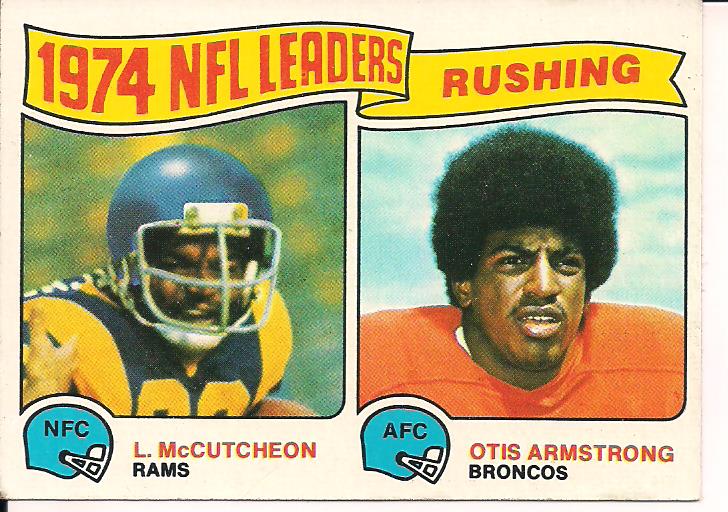
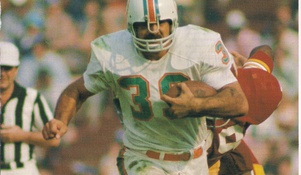
1975 Topps football card
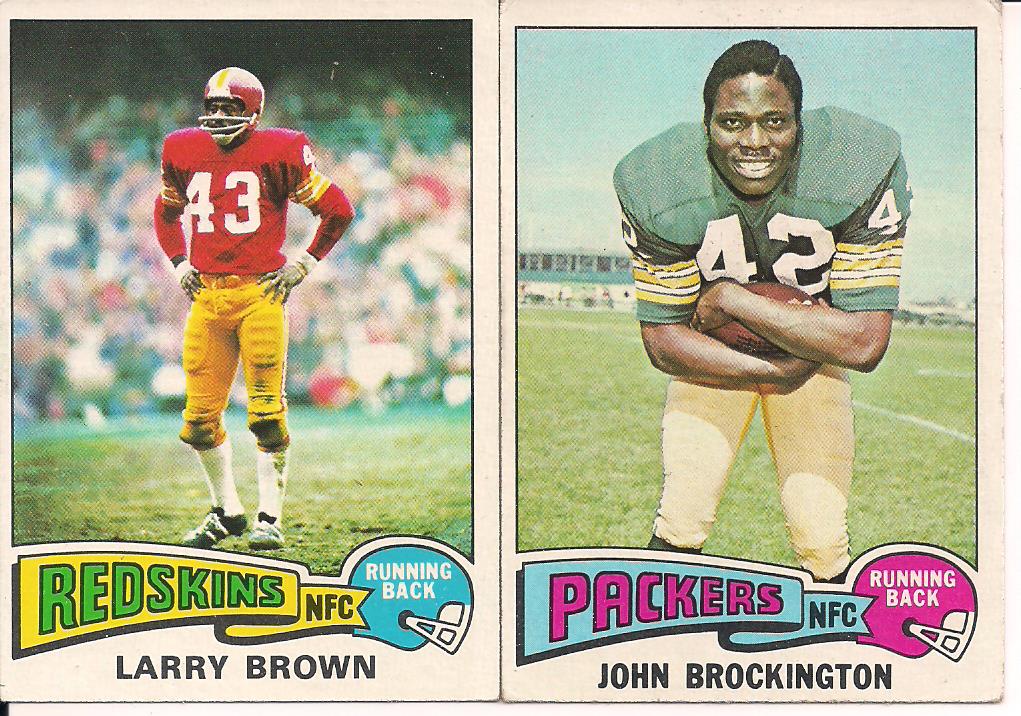
1975 Topps football cards
The 1970's – Decade of the NFL Running back
Whatever happened to the running game? Call me old fashioned, but I miss the days when offenses would pound away at defenses with a solid running game.
I suppose some people see this as boring. They call it three yards and a cloud of dust, but in my opinion, todays game is boring. Pass after pass after pass. Penalty after penalty after penalty.
How I miss 1970's football. It was the decade of the running back. There were so many great running back combinations.
The Cowboys had Walt Garrison, 1969 rookie of the year Calvin Hill and 1970 rookie of the year Duane Thomas. In Superbowl VI, the Cowboys ran for a combined 252 yards on 48 attempts. Roger Staubach threw just 19 times.
The Packers had 1971 rookie of the year John Brockington and McCarther Lane. In 1972 they ran for a combined 1,848 yards.
The Cardinals had speedy Terry Metcalf along with bruising fullback Jim Otis. In 1975 they ran for a combined 1,892 yards.
The Rams had Lawrence McCutcheon along side another bruising fullback Jim Burleson. Together they combined for 1,951 yards in 1973.
The Steelers had hall of famer Franco Harris and Vietnam veteran Rocky Blier. In Superbowl nine, against the famed Vikings “purple people eaters” Harris ran for 158 yards on 34 carries, and Terry Bradshaw threw only 14 passes. The following season, Harris and Blier combined for a staggering 2,164 yards.
The Miami Dolphins had possibly the best combination of running backs ever, with hall of famer Larry Csonka, speedy Eugene “Mercury” Morris, and reliable Jim Kiick. In 1972 the Dolphins became not only the first and only undefeated team in history, but also the first team to have two running backs to gain at least 1,000 yards in a season. Csonka had 1,117 yds, and Morris had an even 1,000 yds. Add Kiick's 521 yds, and the trio had a combined 2,638 yds. So dominate was their running game that Quarterback Bob Griese threw only 18 passes combined in their two Superbowl victories. By comparison, quarterbacks threw an average of 36 times per game in 2015, and it is not at all uncommon for a quarterback to throw 50 times in a game toady.
But the sad reality is, so many of these great backs had their careers cut short by injuries, especially knee injuries. There was no arthroscopic surgery back then, and advances in rehab and physical therapy were not anywhere near what they are today.
Let's take a look back at ten great runningbacks (in no partucular order) of the 1970's, who might have gone on to a hall of fame career if not for injuries shortening their career.
# 1 – Ron Johnson 1969-1975. Started his career with the Browns, but had a lackluster rookie season playing in the same backfield as hall of famer Leroy Kelly. In 1970 he was traded to the Giants and became the first player in Giants history to gain over 1,000 yards in a season. In 1971 he injured his thigh in the off-season playing basketball. The injury required surgery and he missed the first six games of the season. After playing two games, he suffered ligament damage in his knee and missed the rest of the season. He came back strong in 1972 to go over the 1,000 yard mark again. He had another fine season in 1973 gaining 902 yards, but the injuries were taking their toll, and he had disappointing seasons in 1974 & 1975. He retired before the 1976 season. From 1964 to 1980, the Giants had only two winning seasons, 1970 &1972. It's no coincidence that those were also the two seasons that Ron Johnson gained over 1,000 yards.
# 2 - Larry Brown 1969-1976 Started his career with the Redskins under Coach Vince Lombardi. Gained 888 yards in his rookie season which set the all-time team record. The following season he became the first Redskins player to gain over 1,000 yards in a season. He gained over 900 yards in 1971 and went over the 1,000 yard mark again in 1972.He was named the 1972 NFL MVP and led the Redskins to their first Superbowl appearance. He was selected to four pro bowl teams, and was voted as one of the 70 greatest Redskins players ever. Despite his lack of size – 5'11” 195 Lbs, he was a tough man to tackle. He played with reckless abandon. Some feel this led to his many injuries and a shortened career, but Brown said he has no regrets.
# 3 – John Brockington 1971-1977 The Packers selected Brockington as their first draft choice in 1971 and he did not disappoint. He was voted rookie of the year and became the first running back in NFL history to gain over 1,000 yards in his first three seasons. He was one of the first running backs to combine brute force and speed. He was selected to three straight pro bowls and led the Packers to the playoffs in 1972, after a four year drought. His rushing total fell to 883 yards in 1974, and after disappointing seasons in 1975 and 1976, he was traded to the Chiefs, but the injuries had taken their toll and he retired after the 1977 season.
# 4 – Steve Owens- 1970-1974 - The Heisman trophy winner in 1969, he was the first draft pick of the Lions in 1970, but missed the first half of the season due to a severely separated shoulder. He showed great promise in 1971, becoming the first Lions player in the teams history to gain over 1,000 yards. He was selected to the pro bowl team. He was plagued by injuries in 1972 and 1973. In 1974 he seemed to finally be rid of the injury bug and was on his way to a great game on Thanksgiving day, gaining 46 yards on his first four carries, but then tore the ligament in his left knee. He was unable to play at all in 1975 and was forced to retire before the start of the 1976 season. One can only speculate how good Steve Owens could have been if he had not been plagued by injuries.
# 5 – Lawrence McCutcheon – 1972-1981 - During his eight seasons with the Rams, they made the playoffs seven times, including one Superbowl appearance. In a 1975 playoff game vs. the Cardinals, he set a then NFL playoff record by rushing for 202 yards on 37 carries. He led the Rams in rushing yardage five years in a row, and rushed for over 1,000 yards four times. He was selected to five straight pro bowls from 1973-1977. He was plagued with injuries in 1978 and his rushing yardage dropped to 420 yds. After another injury plagued season in 1979 he considered retirement, but played on for another two seasons with the Broncos, Seahawks, and Bills. Had he been able to stay healthy for another one or two seasons, McCutcheon would surely be in the hall of fame.
# 6 - Marv Hubbard – 1969-1977 Hubbard was cut by the Raiders before the 1968 season, but made the team the following year. He saw limited playing time in 1969 & 1970, but led the team in rushing yards in 1971 with 867 yds. In 1972 he rushed for 1,100 yds., setting the all-time team record . He led the team in rushing four years in a row 1971-1974 and totaled 3,755 rushing yards during that four year span. He was selected to three pro bowls and his career 4.82 yds per carry ranks fourth all-time for fullbacks. Hubbard relished running over would be tacklers, but his aggressive style of play led to a series of shoulder injuries in 1975. He was placed on injured reserve in 1976, but did receive a Superbowl ring after the teams victory in Superbowl XII . He played one more season with the Lions in 1977, but saw limited playing time and retired at the end of the season.
# 7 – Otis Armstrong – 1973-1980 Armstrong saw limited playing time with the Broncos in his rookie season, but led the entire league in his second season, exploding for 1,407 yards and a 5.3 avg in a 14 game season. He was plagued by injuries in 1975, but bounced back the following season to go over the 1,000 yard mark again. In 1977 he was again plagued by injuries, but still helped the Broncos to reach their first Superbowl. He played on for three more seasons but was never able to fully recover from his injuries and was forced to retire after eight seasons.
# 8 – Don Woods – 1974-1980 Woods was the 6th round pick of the Packers in 1974, but was released before the start of the season. The Chargers picked him up but he did not suit up for the first two games of the season. In the next twelve games he gained 1,162 yards, setting a then NFL record for a rookie. He also set another record for a rookie by rushing for over 100 yards in seven games. He was named rookie of the year. He injured his knee the following season, and although he played six more seasons, he was never able to match his magical rookie season.
# 9 – Chuck Foreman – 1973-1980 The 1973 rookie of the year was selected to five straight pro bowls. He gained over 1,000 yards three years in a row, 1975-1977. He was named NFC player of the year in 1974 and again in 1976. In 1975 he scored 22 touchdowns, a then record for running backs. That same year he caught 73 passes for 691 yards, also a record for running backs. His rushing yardage dropped below 1,000 yards in 1978, although he still caught 61 passes. He was plagued by injuries in 1979. He played one more injury plagued season in 1980 with the Patriots and retired at the end of the season. Like McCutcheon of the Rams, if he had only been able to stay healthy for one or two more seasons, he would surely be in the hall of fame.
#10 – Lydell Mitchell – 1973-1980 In his second season with the Colts, he came up just a little short of a 1,000 yard season, gaining 963 yards. He gained over 1,000 yards the next three seasons in a row, 1975-1977. He was also selected to the pro bowl in each of those three seasons. He also led the NFL in receptions in 1974 and again in 1977. He was traded to the Chargers in 1978 where he had another fine season, gaining 820 yards rushing. He was plagued by injuries in 1979 and saw limited playing time. He tried to come back in 1980 with the Rams, but the injuries had taken their toll and he was forced to retire.
# 11 – Billy Simms – 1980-1984 Okay, Simms didn't play in the 1970's, but I didn't think this list would be complete without mentioning Billy Simms. He was the first player picked in the 1980 NFL draft. He gained 1,303 yards in his rookie season and was named rookie of the year.. He followed that with 1,437 yards in 1981. His rushing yardage dropped off in 1982, but in 1983, he again rushed for over 1,000 yards. He was selected to three pro bowls in a row and led the Lions to the playoffs in 1982 & 1983 after a 12 year drought. He was on his way to possibly his best season yet in 1984, gaining 687 yards in eight games, but then suffered a devastating knee injury. For the next two seasons he tried to come back, but was finally forced to retire.