Super Bowl V - The Game I'll Never Get Over
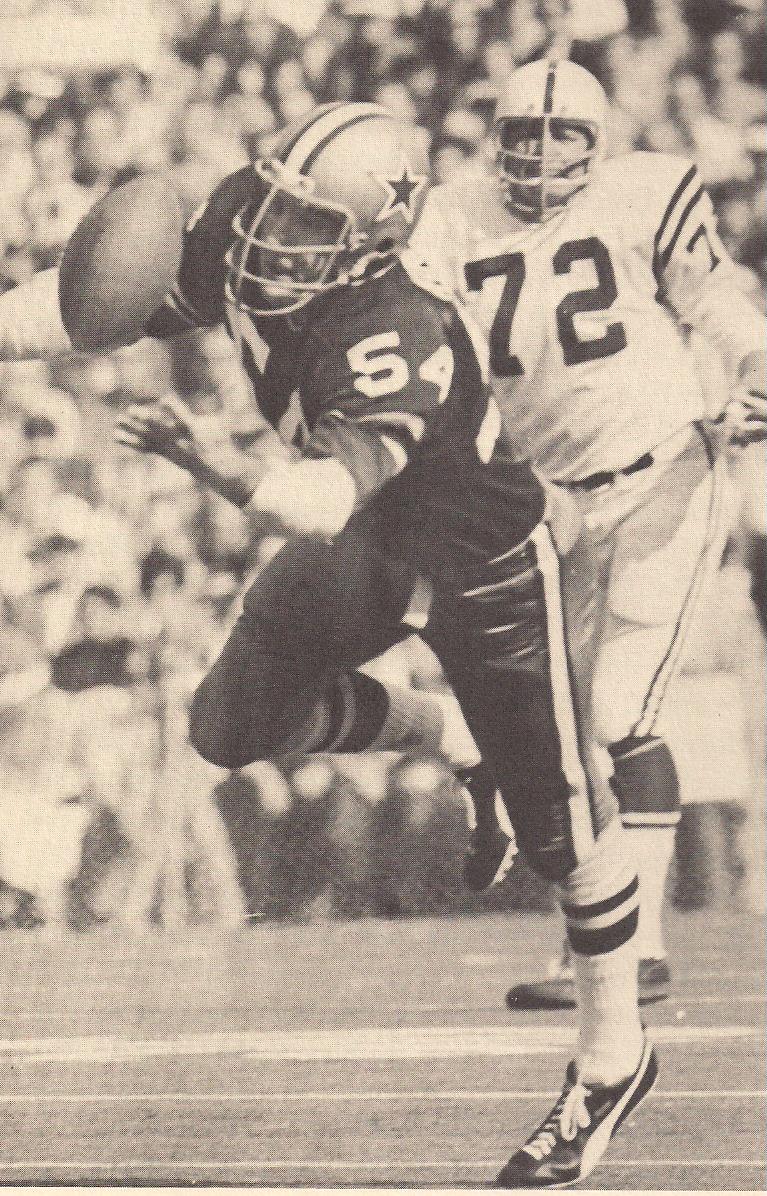
MVP - Chuck Howley
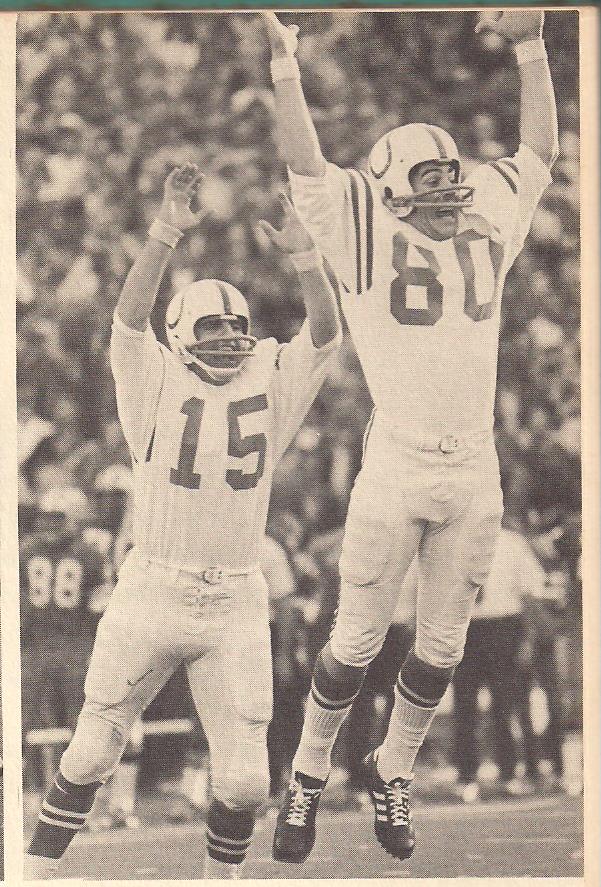
Jim O'Brien
Super bowl V, otherwise known as the blunder bowl, due to a combined eleven turnovers and fourteen penalties. It’s the game I’ll never forget!
I was about two months shy of my ninth birthday and a huge fan of the Dallas Cowboys. They had the sharpest looking uniforms in the league. They had the fastest man in the World, “bullet” Bob Hayes on offense, and arguably the best lineman in the league on defense, “Mr. Cowboy” Bob Lilly.
They had compiled an impressive 42-12-2 regular season record from 1966-1969 but; they were the team that couldn’t win the big game. They had lost a heart breaker to the Packers in the 1966 NFL title game, and another heart breaker to the Packers the following year in the famous “ice bowl” game. They lost to the Cleveland Browns in the 1968 playoffs and lost to them again the following year.
Four years in a row with a chance to go to the Super Bowl, four missed opportunities.
They started the 1970 season with a very average 5-4 record. One of those losses was a humiliating 54-13 loss to the Minnesota Vikings. Another of those losses was a 38-0 embarrassment on Monday night football to the St. Louis Cardinals.
It looked like the Cowboys wouldn’t even make it to the playoffs, much less the Super Bowl, but suddenly the Cowboys got hot, winning the next seven games in a row, which included a victory over the Detroit Lions in the playoffs, and a victory over the SF 49ers in the NFC title game.
Finally the Cowboys had made it to the Super Bowl. This was finally going to be their year. I just knew it. But it wasn’t to be. I would have to wait another year before my Cowboys would finally win the Super Bowl. The Cowboys lost Super Bowl V to the Baltimore Colts 16-13.
46 years later and I’m still not over it. I can still see Jim O’Brien, the Colts kicker, trotting onto the field with his unbuckled chinstrap, kicking the game winning 32 yard field goal. The image is burnt into my memory. So many chances to win the game, so many blown opportunities.
One cannot help but wonder if the result would have been different had Coach Tom Landry started Roger Staubach instead of the struggling Craig Morton at QB. Morton had an injured shoulder and elbow and it showed in the two previous games.
He had played poorly in the 5-0 playoff win against the Lions, completing just 4 of 18 passes for a meger 38 yards. His stats weren’t much better the following week in the 17-10 victory over the 49ers, completing only 7 of 22 passes for 101 yards.
To his credit, Morton did not use his injuries as an excuse, but it was obvious he couldn’t get any zip on his passes, which were often underthrown and off target. So why didn’t coach Landry make the switch to second year man Roger Staubach? It would seem the logical thing to do, but if you look into it deeper, you can understand why Landry was hesitant to make the switch.
Throughout his entire coaching career Landry was reluctant to put in an inexperienced player as a starter. He chose Eddie Lebarron over Don Meredith when Meredith first came into the league. He didn’t even start Heisman trophy winner Tony Dorsett until midway into his rookie season. So he wasn’t about to start a second year scrambling quarterback in the most important game of the season unless it was absolutely necessary.
Regardless of how poorly Morton had been playing lately, the Cowboys had just won 7 games in a row with him at QB. On top of that, the Cowboys had the best running attack in the league. They had rushed for a league high 2,300 yards in the 14 game regular season.
Their running game only got better in the playoffs, gaining 209 yds. against the Lions and 229 yards against the 49ers. Rookie sensation Duane Thomas, who took over for the injured Calvin Hill in week six, had gained well over 100 yds in both games.
Their defense, which had struggled the first half of the season was now playing the best defense in the league. In the last six games, they had allowed a mere 25 points to be scored against them. That’s roughly 4 points a game! They had allowed only two touchdowns in those six games.
So while it’s easy to say Landry should have made the switch at QB, it’s also easy to see why he didn’t. Landry expected (and with good reason) for his running attack and his defense to overcome the QB issue in the Super Bowl, just as it had in the prior seven games.
As it turned out, the Cowboys defense played superbly, allowing the Colts just 69 yards rushing. Although they did allow 260 yds passing, 75 of those yards came on a fluke play of two players tipping the ball before it landed in the hands of tight end John Mackey who ran it in for a TD.
The Cowboys running game however, did not live up to expectations, gaining just 102 yards on 31 carries. Duane Thomas was held to just 35 yards on 18 carries. The Colts shut down the vaunted running game of the Cowboys, as predicted by Super Bowl lll MVP Joe Namath on the pre-game show.
Although the Colts had won the NFL title in 1958 &1959, their fans had also had their share of disappointment in recent years. From 1964-1969, Baltimore had compiled an impressive 63-17-4 regular season record, but had nothing to show for it. In 1964 they were crushed by the Cleveland Browns in the NFL title game. The following year they lost a heartbreaker to the Packers in the divisional playoff. In 1967 they were tied with the Rams for the best record in the league at 11-1-2, but since they were in the same division, and the Rams won the tie breaker, the Colts were denied a spot in the playoffs. And of course we all know what happened in 1968, when the heavily favored Colts lost to the NY Jets in the superbowl.
So now let’s take a look at the game.
On their first possession the Cowboys tried to surprise the Colts by throwing deep, but just as in the two previous games, Morton’s passes were badly under thrown. The Colts tried running on their first possession, but were shut down and went three and out, just as the Cowboys had.
On their second possession the Cowboys tried to get their powerful running game going, but again went three and out. The Colts went to the air on their second possession, and were sorry they did, as Chuck Howley intercepted on the first play, but the Cowboys again went three and out.
The Colts Ron Gardine fumbled the punt, and the Cowboys had the ball at the Colts 9 yard line. They gained 4 yds on a run, but then lost 2 yds on the next run. Morton overthrew on 3rd down and the Cowboys had to settle for a field goal.
The Colts went three and out on their next possession. They made their second special teams error when they were unable to down the punt on the one yard line. The Cowboys took over at the 20 and got the 1st first down of the game. They followed this with a couple good runs, a screen pass, and another first down.
Then Morton connected with Bob Hayes on a long pass. A roughing the passer penalty put the ball at the Colts 6 yard line. The Colts were on the ropes now. The Cowboys called a pass, but Morton hesitated and instead of hitting a wide open Duane Thomas in the end zone, the pass was blocked. A second down running play gained nothing and on the next play, Morton was called for intentional grounding .
They settled for another field goal, and what could have been a 14-0 lead was only a 6-0 lead.
The Colts got the ball on the kickoff and at this point they had still not had a first down or crossed the 50 yard line. Then came the controversial tipped pass. Johnny Unitas threw high to Eddie Hinton. Hinton tipped the ball; John Mackey caught it and ran for a touchdown.
The rule at that time was that the ball could not be touched by two receivers on the same team, unless it was touched in between by a player on the other team. The referee determined that the Cowboys Mel Renfro touched it. The Cowboys insisted he didn’t.
We’ll never really know if he did or not because they didn’t have the close up camera equipment, instant replay, and a hundred different camera angles back then. It looked like Renfro may have touched it, but it’s hard to say for sure. The Colts missed the extra point and the score was now 6-6.
Dallas got the ball and went three and out again. Baltimore got the ball and continued to try to run without success. Three and out!
Dallas couldn’t run either. Neither QB was playing well, and the defenses weren’t giving an inch. Three and out for the Cowboys.
On the Colts next possession, Unitas was forced to run and took a shot to the ribs by linebackers Lee Roy Jordon and Chuck Howley, causing Unitas to fumble. Howley recovered at the Colts 30 yard line. A few plays later the Cowboys had a touchdown and a 13-6 lead.
After a good kickoff return and a pass interference call, it looked like the Colts might finally have something going, but Cowboys defensive end George Andrie put a strong rush on Unitas, forcing him to rush the pass, which was intercepted by Mel Renfro. Untias took another shot to the ribs on the play, and limped off the field in obvious pain.
The Cowboys had complete control of the game now, and were poised to move in for the kill. Up to this point the only time the Colts had been able to move the ball at all, was on the fluke tipped pass play. But Dallas was having trouble moving the ball as well, as the Colts defense dug in and again forced the Cowboys to punt.
Earl Morral came in for the injured Johnny Unitas and finally got the Colts moving. They had a first down on the Cowboys 2 yard line, but then Bob Lilly and the doomsday defense dug in. After three runs produced no gain, the Colts decided to go for it on fourth down.
After an incomplete pass, the Cowboys took possession. Oddly, the referees moved the ball from the 2 yard line to the 20. Apparently that was the rule back then and I’m not sure why? Dallas ran out the clock and it was half time.
The Colts continued to turn the ball over, as they fumbled the opening second half kickoff. Dallas took over on the 31. Two good runs got them to the 15. It appeared the Cowboys finally had their running game on tract, as three more runs brought the ball to the 2 yard line.
On the next play, Duane Thomas fumbled. Dave Manders, the Cowboys center, came out of the pile holding the ball in his hands, but the referee signaled Colts ball.
This was the biggest play of the game in my opinion. Had the Cowboys scored a touchdown here, it would have been extremely difficult for the Colts to come back from a 20-6 deficit the way the Cowboys defense was playing.
The Colts managed to move the ball enough to attempt a 52 yard field goal, but the kick was short. Once again different rules back then. Mel Renfro, waiting in the end zone, was expecting the ball to roll into the end zone for a touch back, but the ball suddenly stopped and the Colts downed it at the one yard line.
Dallas went three and out again and the Colts took over at the Cowboys 46. A clipping penalty put them back to their own 39. A long pass put them at the Cowboys 15, but another Chuck Howley interception ended any hopes of a Baltimore score.
The Cowboys Walt Garrison had a big run, but the Colts defense once again stiffened and the Cowboys were forced to punt. A pass interference call gave the Colts the ball at their 31 and on the next play they gained another 23 yards on a pass play. Then a holding penalty against Dallas gave them the ball at the 39. On the next play, Baltimore tried some trickery, with running back Sam Havrilak throwing to receiver Eddie Hinton, who caught the ball and was headed to the end zone, but was hit from behind by Mel Renfro. Hinton fumbled it out of the end zone.
Dallas took over at the 20, but now it was the Cowboys turn to give the ball away. An interception by Rick Volk gave the Colts the ball at the Cowboys 2 yard line. This time they were able to punch it in, and the game was now tied 13-13.
Dallas took over and got to the 50 before the drive stalled. A good punt pinned the Colts on their five yard line. Three runs produced little gain and they punted. Dallas got the ball at the Colts 48 with 1:52 left in the game and two timeouts remaining.. Enough time to get into field goal range and end it with a sloppy, but hard fought 16-13 victory. On first down they ran for no gain. On second down Morton dropped back to pass.
A holding penalty (15 yards back then) put them back at their 27. Why the 27? The rule at that time, was to mark off the 15 yards from the spot of the foul. The holding occurred on the 42. The Cowboys went from a first and ten on the Colts 48, to a second and 35 on their own 27. Surely the normally conservative Cowboys would try to run out the clock and play for overtime.
Instead they elected to pass.
The ball was thrown too high, tipped by Dan Reeves, and intercepted by Mike Curtis. Colts ball on the 29. Two running plays got it to the 24 with 9 seconds left. Jim O’Brien kicked a 32 yard field goal with 5 seconds left.
The Colts kicked off. Dallas had time for one play, which was intercepted. Game Over!
I was so bitterly disappointed. I thought for sure they were going to win, and erase the tag of “the team that couldn’t win the big game” I was so young and so heartbroken. I cried myself to sleep that night.
Even though the Cowboys would finally win the Superbowl the following year with a dominating 24-3 win over the Miami Dolphins, I never really got over that heartbreaking loss in Superbowl V.
I’m not sure I ever will.